Blood Pressure Monitoring: Why It Matters Daily
- Nov 21, 2025
- 8 min read
Blood pressure is one of the most important indicators of your overall health, yet it’s often overlooked until a problem arises. What many people don’t realize is that even small changes in your daily readings can reveal how well your heart and blood vessels are functioning. Regular blood pressure monitoring isn’t just for those diagnosed with hypertension; it’s a vital tool for anyone who wants to stay proactive about their health.
By keeping track of your numbers each day, you can catch subtle changes early, manage risk factors more effectively, and work with your healthcare provider to prevent complications before they start.
In this post, we’ll explore why daily blood pressure monitoring matters, what your readings really mean, and how building this simple habit can make a lasting difference in your well-being.
Table Of Contents:
What Do Those Blood Pressure Numbers Even Mean?
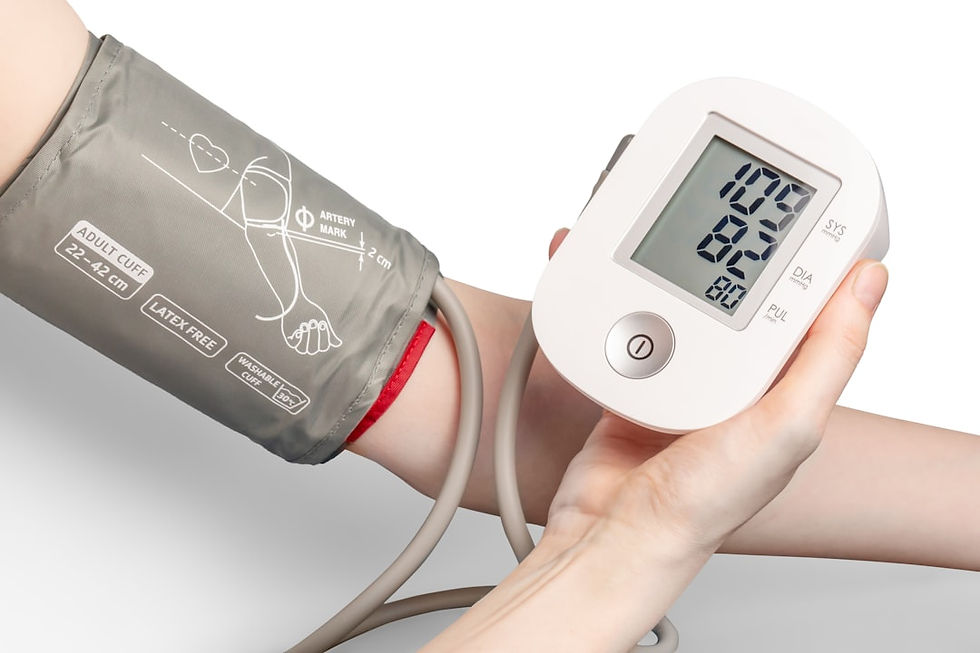
Every time you take your blood pressure on a digital monitor, you see two numbers on the screen.
The top number is your systolic pressure. This number measures the pressure in your arteries when your heart beats. It represents the peak pressure generated by your heart to push blood out to the rest of your body.
The bottom number is your diastolic pressure, which is the pressure in your arteries when your heart rests between beats.
Both numbers are important indicators of your cardiovascular health. According to the American Heart Association, they fall into several blood pressure categories that help determine your risk. Understanding where your numbers fit helps you and your doctor make informed decisions.
Blood Pressure Category | Systolic mm Hg (top number) | Diastolic mm Hg (bottom number) | |
Normal | Less than 120 | and | Less than 80 |
Elevated | 120–129 | and | Less than 80 |
High Blood Pressure (Hypertension) Stage 1 | 130–139 | or | 80–89 |
High Blood Pressure (Hypertension) Stage 2 | 140 or higher | or | 90 or higher |
Hypertensive Crisis (consult your doctor immediately) | Higher than 180 | and/or | Higher than 120 |
Another number to be aware of is pulse pressure, which is the difference between your systolic and diastolic numbers. A consistently high pulse pressure can also be a marker for heart problems. These categories are a tool to empower you, not to scare you, giving you the knowledge to talk with your healthcare provider.
Why You Should Care About Regular Blood Pressure Monitoring
Adding blood pressure checks to your daily routine might seem like a chore. The benefits, however, are significant. This simple habit provides a window into your health, often spotting trouble before it becomes serious.
Spotting the "Silent Killer" Early
Hypertension is often called the "silent killer" for a good reason. It rarely has obvious symptoms until significant damage has occurred. You can feel perfectly fine while your blood pressure is at a dangerous level.
The Centers for Disease Control and Prevention points out that millions of Americans have high blood pressure without knowing it. Regular home monitoring can catch upward trends early. This allows you and your doctor to take action before it leads to serious issues like a heart attack, stroke, or kidney disease.
Tracking Your Treatment's Progress
If you have started making lifestyle changes or taking medication, how do you know if it's working? Home monitoring provides the answer you need. Seeing your numbers improve day by day can be motivating and reinforces healthy habits.
It also gives your doctor valuable data. Instead of relying on a single reading from your office visit, they can see your blood pressure patterns over weeks or months. This helps them fine-tune your treatment plan for the best possible results.
Avoiding "White Coat Hypertension"
Do you get nervous just visiting the doctor? Many people experience anxiety in a clinical setting. This feeling can cause a temporary spike in your blood pressure, a condition known as white coat hypertension.
If your blood pressure is only measured at the doctor's office, you might be diagnosed with high blood pressure when your readings are actually normal at home. Blood pressure monitoring at home gives a more accurate view because it shows what your blood pressure is like in your real, everyday life.

Detecting Masked Hypertension
The opposite of white coat hypertension is a condition called masked hypertension. This occurs when your blood pressure is normal at the doctor's office but high at home. This condition can be just as dangerous as sustained high blood pressure because it often goes undetected.
Without home monitoring, you and your doctor might miss this important health risk. Regular checks at home are the only way to uncover this hidden danger. It allows for early intervention before long-term damage can happen.
Choosing the Right Blood Pressure Monitor
Walking into a pharmacy or searching online reveals dozens of blood pressure monitors. How do you pick the right one?
For the most accurate results, healthcare professionals recommend an automatic, upper-arm cuff monitor. These devices are generally more reliable than wrist or finger models. Their accuracy has been verified in numerous studies because they measure pressure at the brachial artery, which is a better reflection of your core blood pressure.
What to Look For in a Device
First, cuff size is critical. A cuff that is too small or too large will give you inaccurate readings. Most devices come with a medium-sized cuff, but you should measure your arm to be certain it will fit you properly.
Think about ease of use. A monitor with a large, easy-to-read digital display is helpful for anyone, especially those with vision difficulties. Many modern models are operated with a single button press, which removes any confusion from the process.
Look for a device that has been clinically validated for accuracy. Organizations like the Association for the Advancement of Medical Instrumentation (AAMI) have standards for these devices. Some monitors will also have an irregular heartbeat detector, which can alert you to a potential arrhythmia to discuss with your doctor.
Also consider how the device stores data. Some monitors can save dozens of readings internally, often for more than one user. Others can sync via Bluetooth to an app on your smartphone, making it simple to track your trends and share them with your doctor.
How to Take Your Blood Pressure the Right Way
Having a great BP monitor is only half the battle. To get accurate readings, you have to use it correctly.
Consistency is your main goal. Try to take your readings at the same time each day, such as in the morning before breakfast and medication, and again in the evening. This helps create a reliable baseline that your doctor can use to assess your health.
Here is a simple routine to follow for the most reliable measurements.
Get Ready: Do not eat, smoke, exercise, or drink caffeine for at least 30 minutes before taking a reading, as these can temporarily raise blood pressure. Use the restroom first. A full bladder can put pressure on your abdomen and slightly increase your reading.
Sit Correctly: Find a quiet place to sit calmly for at least five minutes. Your back should be straight and supported by a chair. Your feet should be flat on the floor, and your legs should not be crossed, as crossing them can constrict blood flow.
Position Your Arm: Rest your arm on a flat surface, like a table, with your palm facing up. The upper part of your arm should be at about the same level as your heart. This prevents gravity from falsely raising or lowering your reading.
Place the Cuff: Wrap the cuff around your bare upper arm, about an inch above the bend of your elbow. It should be snug, but you should be able to slide two fingertips underneath it to confirm it's not too tight.
Take the Reading: Press the start button and remain still and quiet while the machine works. Talking, moving, or watching television can affect the results. Focus on staying relaxed.
Record Your Results: When the reading is complete, write it down in a logbook or save it to the app. Take a second reading one to two minutes later and record that as well. Averaging the two readings gives a more accurate result.
Common Mistakes in Blood Pressure Monitoring (and How to Avoid Them)
Getting an accurate reading is not always as simple as strapping on a cuff and pressing a button. Several common mistakes can distort your results.
Measuring Over Your Clothes
It might seem convenient to just push up your sleeve, but taking a reading over clothing is a bad idea. Even thin fabrics can interfere with the monitor's sensors and block the cuff's ability to compress the artery properly. This can easily add several points to your systolic reading.
Always place the cuff directly on your bare skin. It only takes a few extra seconds and helps the monitor properly detect the blood flow through your artery. This simple step is vital for accuracy.
Using the Wrong Cuff Size
We mentioned this before, but it is worth repeating. An improperly sized cuff is one of the biggest sources of error in blood pressure measurement.
If the cuff is too small for your arm, your readings will be artificially high. Conversely, if the cuff is too large, your readings will be artificially low.
Before you buy a monitor, measure the circumference of your upper arm with a flexible measuring tape. Then, check the monitor's specifications to see that your arm size falls within the cuff's designated range.
Not Resting Before the Reading
Life is busy, and it can be tempting to rush in, sit down, and immediately take your blood pressure. But your body needs time to settle. Any physical activity, even walking around the house, can raise your blood pressure temporarily.
This is why doctors recommend you sit quietly in a comfortable chair for at least five minutes before you begin. This period allows your heart rate to return to its normal resting state. It gives you a true baseline reading rather than one influenced by recent activity.
Incorrect Posture and Arm Position
How you sit matters just as much as being still. Slouching on a sofa can impact your reading. Always sit upright in a chair with your back supported.
Your arm position is equally important. If your arm hangs down at your side or if you hold it up in the air, the reading will be inaccurate. Supporting your arm on a table so that the cuff is level with your heart is the correct procedure.
Making Sense of Your Readings: When to Call the Doctor
You now have a log full of numbers. What do you do with them?
Remember that blood pressure fluctuates throughout the day, so a single high reading is not usually a cause for panic. What truly matters is the trend over time.

Your log will show your average blood pressure, which is far more meaningful than any single measurement. Look for patterns in your daily readings, and note any consistent upward movement.
It's also helpful to understand what can cause temporary spikes, such as a high-sodium meal, a stressful day, or poor sleep. Noting these factors in your log can provide useful context. This information can help you connect lifestyle choices to your blood pressure numbers.
Share your log with your doctor at every appointment. This information helps them make well-informed decisions about your health care.
However, sometimes your readings may suggest you need to call them sooner. If your numbers are consistently above the normal range, you should make an appointment. For example, if your average reading stays above 130/80 mm Hg, it is time to have a conversation.
Also, if you get a reading in the hypertensive crisis range and have symptoms like chest pain, shortness of breath, or vision changes, you should seek medical help right away.
Conclusion
Starting a routine of blood pressure monitoring is a significant step toward proactive health management. It moves you from being a passenger to the pilot of your wellness journey.
The process is simple and does not take much time. The information it provides, however, is priceless. It empowers you with the knowledge needed to make healthier choices every day.
Consistent blood pressure monitoring allows you to work more effectively with your doctor, creating a partnership built on clear and accurate data. Take that first step today. It is a commitment to a healthier tomorrow.
Stay on top of your health. Book your general physical today — same-day slots open!


Comments